Where to Watch
External Links
Contents
Ping Pong the Animation: A True Masterpiece Review
Original Title: Ping Pong the Animation
Why Watch It?
- Unique, groundbreaking art style
- Profound character psychological development
- Deep exploration of sportsmanship & self-discovery
Why Skip It?
- Divisive, unconventional art style
- Fast-paced, dense visual information can be overwhelming
- Intense focus on psychology over pure action may not suit all
Our Review
Written by AnimeReview TeamThe story is a masterclass in character-driven narrative, exploring themes of talent, ambition, friendship, and the very meaning of passion. I was completely invested in Peco's fall from grace after his humbling defeat by Kong Wenge, watching his cocky exterior crumble to reveal a vulnerable individual grappling with self-doubt. His subsequent struggle to rediscover his love for the game and his arduous journey back to form, under the unexpected mentorship of Obaba, was incredibly inspiring. Simultaneously, Smile’s evolution from a detached, almost robotic player who holds back, to someone who embraces his incredible talent, driven by a desire to play against his "hero," Peco, was absolutely riveting. This anime isn't just about winning matches; it's about winning the internal battles that shape who you are.
The characters are undeniably the beating heart of "Ping Pong the Animation." Peco, with his infectious confidence that eventually gives way to profound introspection, completely stole my heart. I cheered for him, felt his pain, and celebrated his triumphant return. Smile, on the other hand, is a quietly powerful force; his journey to understanding his own strength and purpose resonated deeply with me. But it's not just the protagonists; even the supporting cast, like the exiled Kong Wenge grappling with his lost glory and adapting to a new country, or the stoic Kazama (Dragon) burdened by immense pressure, are all given incredible depth and humanity. Their individual struggles and aspirations are woven into the fabric of the narrative, making every player feel like a real person with a rich inner life.
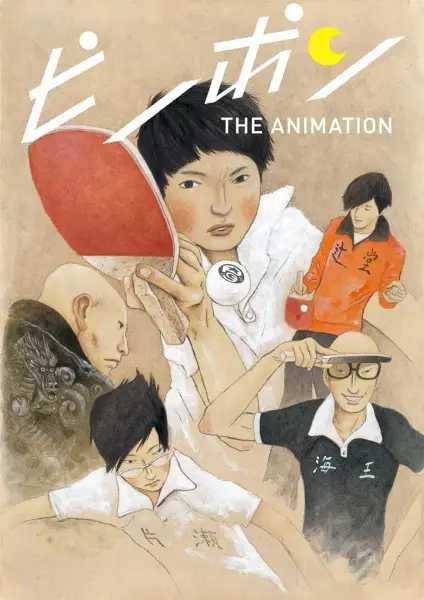
Now, let's talk about the animation – it's nothing short of revolutionary. Tatsunoko Production's decision to embrace Masaaki Yuasa's distinct, fluid, and often abstract style elevates "Ping Pong" beyond conventional anime aesthetics. The art might not be "beautiful" in the traditional sense, but it is intensely expressive and wildly kinetic. The matches themselves are a blur of dynamic lines, distorted perspectives, and exaggerated movements that perfectly capture the sheer speed and intensity of ping-pong. You don't just see the players hit the ball; you *feel* the force, the spin, and the psychological weight behind every stroke. The use of split screens and comic book-like panels to convey internal monologues and rapid-fire exchanges is pure genius, immersing you directly into the minds of the athletes.
And the soundtrack? Absolutely phenomenal. It's a perfect companion to the visual storytelling, weaving through moments of intense drama, quiet contemplation, and explosive action with remarkable precision. The score knew exactly when to swell with triumphant energy, when to underscore a character's melancholic resolve, or when to provide a driving beat that matched the lightning-fast pace of a rally. Certain tracks still give me goosebumps when I recall them, having been so perfectly intertwined with pivotal emotional turning points in the story. It truly amplifies every single moment, making the experience even more visceral and unforgettable.
What makes "Ping Pong the Animation" truly special is its ability to transcend the sports genre. It's a profound character study wrapped in a high-stakes competition, a philosophical exploration of what it means to be alive, to strive, to fail, and to find joy in your chosen path. Moments like Peco's rigorous training montage with Obaba, where he sheds his former self to rise anew, or Smile's powerful awakening on the court, shedding his "robot" persona, are etched into my memory. The culminating match between Peco and Smile isn't just a battle for victory; it's a celebration of their friendship, their growth, and their shared love for the game, brought to life with an emotional payoff that left me breathless.
"Ping Pong the Animation" is more than just an anime; it's an experience. It’s a beautifully raw, deeply human tale that challenges you to look beyond the surface and appreciate the passion, pain, and triumph of its characters. If you're looking for something genuinely unique, emotionally resonant, and visually groundbreaking, you owe it to yourself to watch this masterpiece.
Frequently Asked Questions
Synopsis
If you're looking for an anime that uses a sport as a vehicle for deep character study and philosophical questions, then I really think you need to check out *Ping Pong the Animation*. This isn't just a show about smashing a little ball; it's a raw, vibrant exploration of friendship, ambition, and what it truly means to pursue a passion. At its heart are two lifelong best friends, Yutaka "Peco" Hoshino and Makoto "Smile" Tsukimoto, who are as different as night and day. Peco is all swagger and boundless confidence, convinced he’s the best and destined for greatness, though sometimes his practice habits don't quite match his lofty aspirations. Smile, on the other hand, is quiet, unassuming, and almost expressionless, yet beneath that calm exterior lies an undeniable, almost terrifying, talent for the sport that he often holds back. Their bond, forged over countless games of ping-pong since childhood, feels truly unbreakable.
Their comfortable world, however, gets a serious shake-up when news arrives of a formidable new player: Kong Wenge, an ex-national team player from China who has come to Japan. Always one for a challenge, Peco eagerly drags Smile along to check him out, brimming with his usual self-assuredness. What unfolds next is a brutal, eye-opening defeat for Peco, a loss so absolute it shatters his confidence and forces him to question everything he thought he knew about himself and his place in the game. It’s a moment that really hits hard, making you wonder what happens when your greatest passion suddenly feels meaningless.
While Peco grapples with his shattered ego and the weight of his defeat, the coach at their own Katase High School ping-pong team begins to take a keen interest in Smile. Recognizing the immense, untapped potential lurking beneath Smile’s reserved demeanor, the coach sets out to push him, to help him overcome his tendency to hold back. But Smile isn't driven by ambition or a desire to win at all costs; for him, ping-pong is something to be enjoyed, and the idea of playing without that pure enjoyment feels fundamentally wrong. This internal struggle between talent, expectation, and personal fulfillment is something I found incredibly compelling throughout the series.
What makes *Ping Pong the Animation* so special, beyond its truly unique and expressive art style, is how it delves into the psychology of its characters. It's not just about Peco and Smile; you'll meet a diverse cast of players, each with their own complex backstories, internal battles, and reasons for dedicating their lives to ping-pong. This anime beautifully portrays the different ways people approach competition, success, and failure, all against the backdrop of intense, beautifully animated ping-pong matches. If you appreciate a story that prioritizes character development and explores the deeper meanings behind passion and competition, then you absolutely need to give this masterpiece a watch.




Comments (4)
Leave a Comment
They absolutely nailed the vibe of the manga! Especially how they visualized Smile's internal struggles and Peco's growth – it felt so true to Matsumoto Taiyo's art. Seriously one of the best manga adaptations ever.
Okay, I just started Ping Pong and the art style is WILD. Is Smile always gonna be like that? I'm kinda hooked though.
Yo, Ping Pong the Animation is seriously a masterpiece! The art style took a minute to get used to but it absolutely *sells* the speed and emotion. A true GOAT contender for sports anime! 🏆
While the character arcs are undeniably strong, I found the initial few episodes a bit slow-paced, making it hard to recommend to casual viewers who aren't already invested in the genre. Also, the distinct art style can be quite jarring for some.